The Retrim Revival: Why Enthusiasts Fix the Cabin Before the Engine
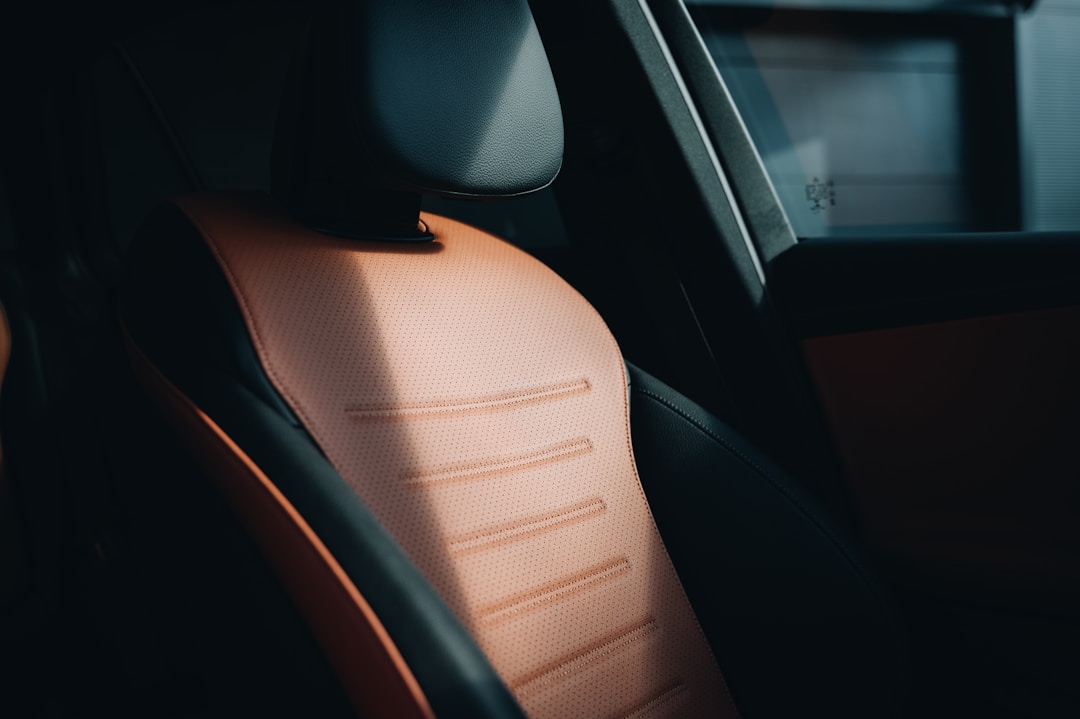
There was a time when the restoration order was practically gospel. You sorted the mechanicals, chased the rust, worried about the paint, and then — if the money hadn't run dry — you finally got round to the seats. The interior was the reward at the end of a long slog, the bit you promised yourself once the important work was done.
That order has quietly flipped. Walk around a club meet in Warwickshire or a Sunday gathering at a Cotswolds car park and you'll find plenty of owners who have spent four figures on a cabin while still running an engine that could charitably be described as "willing". Ask them why and the answers are surprisingly consistent. They drive the car. They sit in it for two hours at a stretch. And a seat base that has given up, a headlining sagging like a hammock, or a door card curling away from its clips is something you notice every single time you turn the key.
Trim shops across the UK have felt this shift. Retrimming has moved from a finishing flourish to a headline job, with waiting lists that reflect a craft where almost nothing can be rushed and very little can be bought off a shelf. It's skilled, patient work — unpicking, patterning, tensioning — and the results are judged by people who will absolutely notice if your pleat spacing is 5mm out.
This article looks at why the cabin now comes first. We'll trace the change in owner behaviour that reordered the priority list, go inside the trim shop to see how a cabin is actually rebuilt, examine the specification details that separate a convincing retrim from an obvious one, and finish by treating the interior as what it really is: a working environment you spend every mile inside.
From Bonnet to Bucket Seat: How the Cabin Jumped the Queue
The old sequence made a certain kind of sense. Mechanical work keeps a car moving; trim only makes it pleasant. But that logic assumed a particular kind of owner — one restoring a vehicle towards a static end point, where the car would eventually sit on a stand with its bonnet propped open and a small crowd admiring the rocker cover.
Most owners aren't doing that any more.
The driven, not displayed, mindset
The modern enthusiast uses the car. There's a run out to a breakfast meet, a club tour taking in three counties, a summer weekend on Welsh B-roads, a drive down to a show in Hampshire rather than a trailer ride. Cars that once emerged twice a season now cover proper mileage, and mileage changes what irritates you.
A camshaft that's slightly tired doesn't announce itself. You adapt to it, drive around it, mention it vaguely as something to sort next winter. A seat base that has collapsed on the driver's side announces itself within four miles, then again for the next ninety. A split door card catches your sleeve. A sagging headlining brushes the top of your head at every bump. These are small indignities, but you meet them constantly, and constant beats severe when it comes to what genuinely spoils a drive.
The appeal of a job with an ending
There's also a practical logic that owners rarely state outright but almost all recognise. Mechanical restoration tends to sprawl. You start with the head gasket, discover the bores, wait six weeks for a part from a specialist in Lincolnshire, and eighteen months later you're still buying things in tens and twenties with nothing visible to show for it.
A retrim behaves differently. The car goes to the trimmer, a specification gets agreed, and it comes back finished. One conversation, one invoice, one date. Whether you choose cloth, vinyl or real leather fabric for upholstery is decided at the outset, and that choice — colour, grain, piping, whether the pleats are period-correct — is often the first genuine specification decision an owner makes about the whole project. For someone three years into a stalled engine rebuild, the appeal of a job with a defined end is considerable.
Why a rebuilt cabin feels like a finished car
Here's the part that surprises people who haven't done it. A retrim changes the perceived condition of the entire vehicle, and by a margin that has almost nothing to do with the money spent.
Think about what the driver actually experiences. You never see the engine while driving. You see, smell, hear and touch the cabin for every second of every journey. Rebuild the interior and the car smells different when you open the door. It sounds different, because taut panels and fresh underlay stop the drumming. It feels different under your hands and against your back. Passengers who know nothing about the car will comment on the inside; almost none will comment on a rebuilt bottom end.
So the cabin does disproportionate work in making a car feel resolved rather than in progress. Owners have worked this out, and the priority list has rearranged itself accordingly — not out of vanity, but because that's where the daily experience of ownership actually lives.
Unpicked, Not Cut Off: What Actually Happens Inside a Trim Shop
Hand a car over to a trimmer and the first thing that happens looks like destruction. It isn't. It's the most important stage of the entire job.
The old cover is the pattern
A good trimmer doesn't take a knife to the existing covers. They unpick them, stitch by stitch, because those tired, sun-baked, split panels are the only accurate record of how the cabin was originally built. Each piece comes off flat and becomes a template.
Before anything is lifted clear, it gets marked up: which way the grain ran, where the seam allowances sat, how many stitches per inch the factory used, which edge was the leading edge. Panels are numbered and photographed in place. Trimmers who skip this stage end up guessing, and guesswork shows in the finished cabin as panels that don't quite sit, seams that wander, and a driver's seat that looks subtly unlike the passenger's.
This is also the point where hides and cloth diverge on the bench. Fabric arrives on a roll at a consistent width, so panels can be laid out in a tidy grid and cut to a repeating pattern. Real leather fabric for upholstery arrives as whole hides, each one a different shape with its own scars, stretch marks and growth patterns. The trimmer must nest the templates around those natural markings, keeping the tightest areas for panels that take tension and avoiding thin belly sections where a seat face will flex. Stretch direction matters too — hide gives more across the back than along it, so a panel cut the wrong way round will bag out within a season. It's closer to tailoring than to sewing curtains.
The half of the job nobody photographs
Strip a seat and you find an architecture that has been quietly failing for decades. Underneath the cover sit rubber diaphragms, coil springs or sinuous wire, hessian, calico wadding, and foam that has usually gone the way of old bread — crumbling at the bolsters, compressed flat in the middle.
Fitting a beautiful new cover over that is like painting over damp plaster. It will look superb for a fortnight, then the driver's seat will start to lean, the bolster will lose its edge, and the surface will wrinkle in places it shouldn't. Proper retrimming replaces or reprofiles the substrate first:
- diaphragms and webbing renewed to restore base tension
- foams replaced or built up to the original profile, particularly at bolsters and lumbar
- hessian and wadding refitted so the cover has something even to sit against
- squab frames checked for cracked welds and corroded fixings
None of this appears in the finished photographs. All of it determines whether the job still looks right in five years.
Order and tension
Cabins go back together in a specific sequence, and it's rarely the one an amateur would choose. Headlining almost always goes in before the glass and the trim rails, because it needs to be stretched into place and tucked behind fixings that the windscreen rubber then traps. Get that wrong and you're removing a screen you've just paid to have fitted.
Carpets follow the sills and kick panels. Door cards come after the window mechanisms are proven. Seats go in last, because they're the things you'll bang against everything else.
Throughout, the defining quality is tension. A cabin that looks taut, with panels sitting flat and seams running true, reads as properly made. Slackness anywhere — a soft headlining, a baggy seat face, a carpet that ripples — undoes the whole impression, however good the material.
The Tells: Small Details That Betray a Modern Retrim
Two cars, same model, both retrimmed, both immaculate. One looks like it left the factory that way. The other looks lovely but somehow wrong. The difference almost never lies in the quality of the workmanship — it lies in the specification, and in a handful of details that enthusiasts clock instantly without always being able to name them.
Working out what was actually there
Before matching anything, you need to know what you're matching. Original specification is more recoverable than owners expect, provided you look in the right places.
Build records and heritage certificates from marque-specific archives will often list the factory trim code. Body plates and chassis tags carry trim designations on plenty of British and European cars. Then there's physical evidence: lift a seat rail, peel back a carpet edge, unbolt a rear squab, and you'll frequently find a patch of original material that never saw daylight. That unfaded fragment is worth more than any colour chart, because it shows the true dye, not forty years of Sunday sun through the rear screen.
Owners often discover their "black" interior was actually a very dark navy, or that the faded fawn seats started life a decidedly bolder tan.
Piping, pleats and the grammar of trim
Here's where jobs get given away. Trim has its own vocabulary, and the details are noticed in a rough order:
- pleat pitch — the spacing of flutes across a seat face, where a few millimetres either way changes the entire character of the panel
- piping and welting — the diameter of the cord, whether it's self-coloured or contrasting, and how cleanly it turns a corner
- top-stitch spacing and thread colour — factory stitching was often coarser and more widely spaced than modern machines default to
- fluting depth and the presence or absence of French seams on quarter panels
Get the pleat width wrong on a set of seats and the car looks subtly aftermarket to anyone who has spent time around the model, even if they'd struggle to articulate why. It reads like an accent that's almost right.
Matching hide adds its own complication. Sourcing real leather fabric for upholstery to sit alongside an existing original panel is far harder than quoting a colour reference, because you're matching three things at once: the dye, the embossed grain pattern, and the finish. Period grains were often distinctive — tighter, flatter, sometimes lightly printed — while much modern automotive hide carries a heavier, more uniform embossing. Dye batches shift too, so a hide ordered twelve months after the last one may sit a shade cooler or warmer. Trimmers working on partial jobs will often order extra from a single batch and hold it, precisely because the second order rarely matches the first.
When brand new looks wrong
There's a further wrinkle. A completely renewed cabin can look jarring in an otherwise honest, patinated car. Fresh seats against a worn steering wheel rim, sun-bleached dash top and thirty-year-old door furniture create a mismatch that draws the eye to everything you didn't do.
This is why plenty of owners choose deliberately partial work: retrimming the driver's seat and leaving the rest, refreshing seats but keeping original door cards, or accepting a slight tonal difference rather than chasing a perfect match. Some ask for sympathetic finishing so new material sits down quickly rather than gleaming.
The aim isn't showroom-new. It's coherent.
The Two-Hour Test: Your Cabin as a Working Environment
Strip away the authenticity debates and the specification arguments, and a retrim is fundamentally a functional upgrade. This is the part owners tend to discover only after the job is done — that they haven't just bought a smarter interior, they've bought a car they can drive further without arriving frayed.
Call it the two-hour test. Anything can feel fine for twenty minutes. What matters is how a cabin treats you on a run from the Midlands down to the south coast, or a full day of a club tour with three hundred miles on it.
Support, not softness
The most common misunderstanding about seat comfort is that it's about padding. It isn't. It's about geometry.
An original seat that has done four decades hasn't just gone soft — it has lost its shape. The foam has compressed unevenly, the diaphragm has stretched, and the bolsters have collapsed outwards. You now sit lower, further back, and with nothing holding your hips in place through corners, so you brace with your legs and shoulders without realising it. That's where the fatigue comes from.
Rebuilding the profile changes this completely. Correct foam density, restored base tension and reinstated bolster shape put you back at the height the designers intended, with support where your body actually needs it. Crucially, none of this alters how the seat looks. From the outside it's a period seat. From behind the wheel, two hours stops being an endurance event.
Quieting a metal box
Older cars are essentially resonant shells. Without the trim doing its job, road noise, drivetrain drone and panel drumming all arrive in the cabin unimpeded.
The trim is the acoustic treatment, and its condition matters:
- headlining density and its backing absorb roof panel drumming rather than reflecting it downwards
- carpet underlay and felt sound-deadening dull floor and transmission tunnel noise
- door card construction, including the wadding behind the board, stops the door acting as a drum skin
- boot and rear quarter trim contains resonance from the largest empty cavity in the car
A properly retrimmed cabin is noticeably calmer. Not silent — nobody's chasing silence in a car like this — but calm enough that conversation stops being a shouting match and that low-frequency drone you'd stopped consciously noticing turns out to have been quietly exhausting you all along.
What touches you, and when
Then there's the simple matter of contact. Your hands, forearms and back spend the entire journey against these surfaces, and different materials behave very differently across a British year.
Real leather fabric for upholstery has a distinct thermal signature: it feels genuinely cold on a February morning and takes longer to warm than cloth, and it will hold heat readily after a car has stood in July sun behind glass. Cloth is far more forgiving at both extremes but grips clothing and holds dust and moisture. Hide wears at contact points in a predictable way — the driver's outer bolster, the seat edge you slide across, the point where your left elbow rests — which is exactly where regular conditioning pays for itself. It also wipes down in seconds after a wet rally weekend, whereas cloth needs drying out properly if you'd rather not spend the next fortnight with damp seats.
None of this makes one choice correct. It makes the choice worth thinking about in relation to how, and when, you actually use the car.
Where the Miles Are Actually Spent
The retrim revival isn't a triumph of style over substance. It's a correction — a recognition that the place you occupy for every mile deserves at least as much attention as the parts you occupy yourself with once a year on a driveway with the bonnet up.
If you're weighing up where to spend next, a few practical steps make the decision easier. Sit in the car properly, on a proper drive, and pay attention to what actually annoys you at the ninety-minute mark. Lift a seat rail and peel back a carpet edge before you commission anything, because that unfaded scrap of original material is the most reliable specification document you'll ever find. Ask any trimmer you approach what they intend to do beneath the covers, not just on top of them — the answer tells you almost everything about the quality of the job you'll get. And if you're working through a cabin in stages, order your material in one batch and store the surplus, because the hide that matched perfectly last spring may not match next spring.
Above all, decide what you're aiming for. Factory-fresh and coherent are not the same target, and a cabin that sits comfortably alongside a car's honest wear often looks more convincing than one that outshines everything around it.
Here's the question worth sitting with. If you totted up the hours you've spent driving your car against the hours you've spent looking at its engine, which one has earned the investment?
Most owners already know the answer, which is why trim shop waiting lists across the UK keep getting longer. A rebuilt engine gets you further. A rebuilt cabin means you'll actually want to go — and that, in the end, is the whole point of keeping these cars on the road rather than under a cover.
