Making a Cold Room Feel Warm Before You Touch the Thermostat
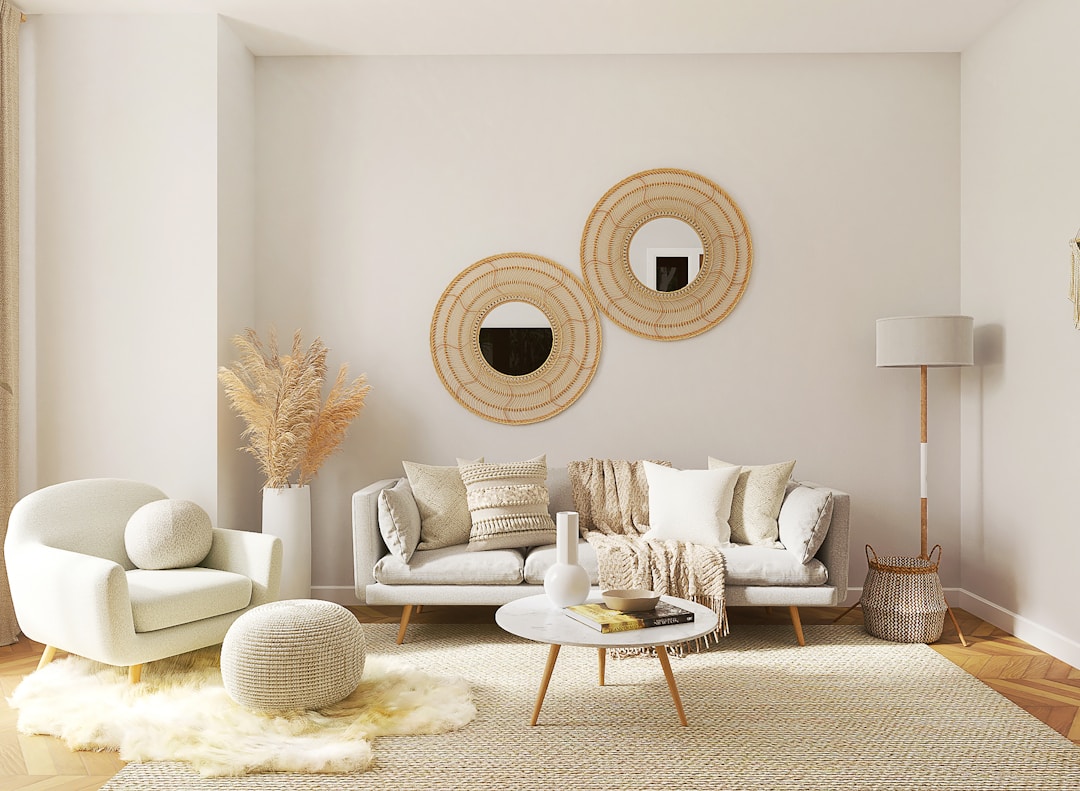
There is a particular kind of British winter frustration that has nothing to do with the weather outside. You have the heating on. The radiator is hot to the touch. The thermostat, when you go and squint at it, insists the room has reached twenty degrees. And yet you are sitting on the sofa with your hands tucked into your sleeves, wondering whether it would be unreasonable to nudge the dial up another notch.
It is not your imagination, and it is probably not a faulty boiler either. Rooms can be warm and still feel cold, because the temperature your body registers is not the same as the temperature your thermostat measures. That gap — between the number on the wall and the sensation in your fingertips — is where most domestic discomfort lives. It is also where the cheapest, fastest improvements are hiding.
Older UK housing stock makes this gap wider than it needs to be. Bay windows with slim glazing, suspended timber floors with gaps between the boards, tall ceilings that send warmed air upwards and away, chimney breasts that were never properly capped when the fire was taken out. None of these show up on a thermostat reading. All of them are quietly draining warmth from the people in the room.
The good news is that you can change how a room feels without changing what it costs to heat. Some of the fixes are free and take ten minutes. Others involve a rug, a curtain lining, or a rethink of where the furniture sits. A few are worth genuine investment, but only once you know precisely what you are solving.
This article works through that process in order. First, why perceived warmth and measured warmth part company. Then, how to walk your own room and find the actual culprits. After that, how to handle the large cold surfaces that dominate a room's comfort. And finally, how to focus your effort on the handful of surfaces your body genuinely touches — which, as it turns out, matter far more than the air between them.
Why the Thermostat Says 20°C and You Still Feel Cold
A thermostat is a simple instrument doing a simple job. It measures the temperature of the air immediately around it, usually in a hallway or on one wall of a living room, and it switches the boiler on or off accordingly. What it cannot do is measure you. And you lose heat in three quite different ways, only one of which the thermostat has any awareness of.
The cold surfaces you can feel but never touch
Your body is constantly radiating heat towards every surface in the room. If those surfaces are warm, very little escapes. If they are cold — a single-glazed sash, a solid brick external wall with no insulation, a quarry-tiled floor — you radiate towards them continuously, and you feel it as a chill on the side of your body facing them.
This is why sitting near a large window on a January evening feels unpleasant even when the room is technically at a comfortable temperature. Nothing is touching you. No air is moving. You are simply losing warmth to a cold pane of glass a metre away, in the same way you would feel the heat of a fire from across the room, only in reverse.
Building physics gives this an unglamorous name — mean radiant temperature — but the practical version is easy to grasp. If the average temperature of the surfaces surrounding you is well below the air temperature, you will feel cold at 20°C. Raise the surface temperatures, and you can feel perfectly comfortable at 18°C.
Why draughts punch above their weight
Your skin holds a thin envelope of air that your body has already warmed. It is only a few millimetres deep, but it works as insulation. Any air movement strips it away, and your body has to warm a fresh layer, over and over.
That is why a slow, barely detectable draught can make a room feel two or three degrees colder than the reading suggests. A sealed modern flat at 19°C will often feel warmer than a draughty Victorian sitting room at 21°C, because in the first case the warmed air stays put and in the second it is being replaced continuously. Draughts do not need to be dramatic to be expensive in comfort terms — they only need to be persistent.
The heat that leaves through direct contact
The third route is the most immediate and the most overlooked. Wherever your body physically touches something, heat transfers directly into it, and the rate depends entirely on what that something is made of.
Consider two chairs standing side by side in the same room at the same temperature. One has a hard, lacquered timber seat. The other has a padded seat with a dense, textured cover. Sit on the first and you will feel a distinct chill for several minutes, because the wood conducts heat away from you efficiently and has enough mass to keep absorbing it. Sit on the second and the surface warms almost immediately.
The difference lies in trapped air. A thin, smooth, tightly woven cover puts your skin in close contact with the material and pulls warmth from you quickly. Wool upholstery fabrics behave differently, because the crimped structure of the fibre holds pockets of air within the weave, and air is a poor conductor. The material barely takes any heat from you at all — it just holds what you give it. There is a happy coincidence buried in that, too: the raised, air-holding surfaces that resist conduction are the same ones that give a room visual depth instead of a flat, even plane. A fabric that feels warm under your hand usually looks warmer from the doorway as well.
Three separate mechanisms, then, and a thermostat that only sees one of them. Which raises an obvious question: in your room, which one is actually doing the damage?
Walk the Room: Finding the Cold Before You Spend a Penny on It
Guesswork is expensive. People buy thick curtains for a window that was never the problem, or seal a letterbox while a redundant chimney quietly vents the room. Twenty minutes with your own hands will tell you more about your room than any amount of reading. Do this on a cold, breezy day, with the heating off for an hour beforehand, and close all internal doors so the room behaves as its own sealed unit.
The perimeter sweep
Start at one corner and work your way round at a slow walking pace, keeping your hand low. A damp palm is the cheapest draught detector there is — evaporation makes moving air obvious. A lit candle or a stick of incense works better still, because you can see the deflection rather than infer it.
Check in this order:
- Window openings, particularly where sash frames meet and where beading has shrunk away from the glass
- The junction where skirting meets floorboards, and any gaps between boards themselves
- Loft hatches, which are often little more than a sheet of ply resting in a frame
- Disused chimney breasts, even ones with a decorative cover over the opening
- Letterboxes, cat flaps and keyholes on any door leading outside
- Behind kitchen units and airing cupboards, where pipes and cables pass through external walls
- Under and around the front door, including the threshold strip
Note what you find. Do not fix anything yet.
The palm test on the big surfaces
Now change what you are looking for. Press a bare palm flat against each major surface and hold it for a few seconds: the glass, the external wall, an internal partition wall for comparison, the floor, the radiator recess if you have one. You are not measuring temperature so much as comparing it. The internal wall gives you your baseline; anything noticeably colder than that is actively pulling heat out of the room and everyone in it.
Then look at your seating from where those cold planes are. Which chair faces the window directly? Which end of the sofa backs onto the external wall? A seat can be perfectly comfortable at one end and distinctly chilly at the other for no reason other than what it happens to be pointing at.
This is also the moment to test the furniture itself. Sit in each seat for five minutes without a throw or cushion and pay attention to what the seat surface does. Chairs covered in wool upholstery fabrics tend to register as neutral or mildly warm by the end of that time, while a leather, vinyl or thin cotton-covered seat in the same room will often still feel cool. If one chair is uncomfortable and another is fine, you have just isolated the problem to the furniture rather than the room.
Ranking what you found
Not all cold sources deserve equal attention, and size is a poor guide to priority. A finger-width gap at ankle height on the side of the house facing the prevailing wind — in most of the UK, the south-west — will do more damage to your comfort than a large cold wall on the sheltered side, because wind pressure drives air through it continuously.
Weight your list by three things: how exposed the source is, how low down it sits, and how close it is to where people actually sit. Finish with a ranked list of perhaps four or five items rather than an exhaustive catalogue of faults. That ranking is what turns the next stage from a shopping trip into a plan.
Softening the Big Cold Planes: Floors, Glass and Bare Walls
Every fix in this section works on the same principle, so it is worth stating up front: you are not adding warmth, you are trapping still air. Air that cannot circulate is an excellent insulator. Air that can circulate is a delivery service, ferrying your heat to the coldest surface available. Almost everything below is a variation on that single idea.
Floors, because they cover the most ground
The floor is usually the largest cold plane in a room and the one your body is in permanent contact with. On a suspended timber floor, you also have the added insult of moving air beneath the boards.
Most people buy rugs by size and pattern, then wonder why the room still feels cold underfoot. The variable that matters more is what sits underneath. A dense pile laid over a felt or felt-and-rubber underlay makes a substantially bigger difference to underfoot temperature than a larger, thinner rug laid straight onto boards. If you have a fixed budget, spend it on thickness and underlay rather than square metres.
Coverage still matters, of course, but strategically. Prioritise the routes bare feet actually take and the zone in front of seating, rather than trying to blanket the whole floor.
Windows, where the heat quietly leaves
Glass is the weakest thermal point in nearly every UK room, and curtains are graded by how much still air they hold.
An unlined curtain is decorative and very little else. A lined curtain adds a second layer and a modest air gap. An interlined curtain — with a soft bump or domette layer sandwiched between face fabric and lining — is in a different category altogether, because that middle layer is essentially a sheet of trapped air with fabric on both sides.
But the fabric is only half the job. Warmed air rises, meets the cold glass behind the curtain, cools, drops, and slides out along the floor. That convection loop will happily run all evening behind an expensive curtain that has been left open at the top. Closing the loop is what makes the difference:
- Fit a pelmet, or a curtain track with a deep return that meets the wall at each side
- Let curtains fall to the floor or slightly beyond, rather than stopping at the sill
- Use a blind and curtain together, which creates two air gaps rather than one
That combination usually outperforms either element alone by a comfortable margin.
Walls, doors and the verticals people forget
Cold external walls are harder to treat, but they respond to the same logic. A bookcase against an external wall is a surprisingly effective insulator, because books hold a great deal of still air. Wall hangings and heavy textiles work on the same basis. A curtain across a hall-facing door stops the constant exchange between a heated room and an unheated corridor — a common weak point in UK terraces and older flats.
Where a room is simply too large and too exposed to warm evenly, a folding screen behind a sofa shrinks the effective space and blocks the low draught path across the floor.
And here is the connection worth holding onto. The reason an interlined curtain outperforms a plain one is precisely the reason a dense weave outperforms a thin one on a seat. Wool upholstery fabrics feel warmer to the touch than a flat, smooth cover for exactly the same physical reason a bump-interlined curtain outperforms an unlined one: more trapped air, less heat transfer. Windows, floors and furniture are all running the same principle at different scales.
Warmth Where It Counts: Treating the Surfaces You Actually Touch
Here is a reframe worth sitting with. We talk about heating rooms, but nobody has ever felt a room. You feel a floor under your feet, a cushion at your back, an armrest under your forearm, and the air on the exposed parts of your face and hands. That is a remarkably short list. Heating a volume of air to satisfy four or five points of contact is a strange way round to solve the problem — and it explains why the cheapest interventions are often the ones you notice most.
The fixes below run in order of cost. Work down the list, not up it.
Move things before you buy things
This tier is free and takes an afternoon at most.
- Pull seating out of the draught path. Air moving between a door and a chimney breast, or a door and a window, follows a fairly predictable line across the room. Furniture sitting in that line is permanently in a light breeze.
- Turn the backs of sofas and chairs towards the coldest wall. The frame and cushions then act as a buffer between you and the cold plane, rather than leaving your spine facing it.
- Move a favourite chair a metre away from glass. One metre is often the difference between a noticeable radiant chill and none at all.
- Get seating off a cold floor void where you can, or at least onto a rug.
None of this costs anything, and the improvement registers immediately.
Layer the contact points
The next tier is inexpensive and targets only the surfaces that touch you. Throws over seat backs and arms, sheepskins on hard chairs, seat pads on dining benches, heavier cushion covers for winter, loose covers over leather or vinyl.
The logic is efficiency. If your discomfort comes from conduction at four points of contact, covering those four points delivers most of the available benefit for a fraction of what a reupholstery job would cost. A wool or sheepskin throw over one end of a leather sofa transforms that end of the sofa entirely, for the price of a takeaway.
Rotate them seasonally rather than leaving them out all year. Fabrics that feel welcome in November feel oppressive in June, and a twice-yearly swap keeps both seasons comfortable.
When a proper upgrade earns its keep
Sometimes the honest answer is that a piece of furniture is simply the wrong specification for a cold room, and no amount of throws will fix it. Reupholstery, a replacement cover, or swapping out a hard-surfaced dining bench becomes worth the outlay under two conditions: the seat gets used for a genuine number of hours each week, and the room is in use year-round rather than only occasionally.
If a cover is being changed anyway, the material choice is worth a moment's thought. Wool upholstery fabrics hold body warmth well and stay comfortable across a wide temperature range, which suits a room that swings between chilly mornings and warm evenings. Brushed cottons and chenilles achieve much of the same effect at lower cost, and heavier blends sit somewhere between the two. Where the premium is hardest to justify is on a guest-room chair or a formal dining set used a dozen times a year — there, a good seat pad does the job at a tenth of the price.
A Warmer Room, Not a Warmer Number
The dial on the wall is the least interesting tool you own. It can raise the air temperature, at a cost, and it will still leave you sitting a metre from a cold pane of glass wondering why the room feels miserly. Everything else — the draught path across the floor, the surfaces your body radiates towards, the seat you actually sit on — sits entirely outside its remit.
So start where the evidence takes you. Do the walk-round on a genuinely cold day, write down four or five ranked culprits, and resist the urge to buy anything until that list exists. Then work in cost order: reposition the furniture first, because it is free; layer the contact points next, because it is cheap and immediate; and only then consider the interventions that involve a tradesperson or a serious invoice. Most households find the first two tiers do more than they expected, which tends to shrink the third tier considerably.
Judge the results by feel rather than by numbers. If you can sit through an evening without reaching for a jumper, the room is working, whatever the thermostat has to say about it. Many people find they naturally settle a degree or two lower once the radiant and conductive losses have been dealt with, simply because they stop noticing the cold.
Which leaves a question worth asking the next time you reach for the dial: are you actually cold, or is one particular surface in the room taking heat from you faster than your body can replace it?
There is something quietly satisfying about a room that holds its warmth through good design rather than sheer energy input. It is the difference between a house that has been heated and one that has been made comfortable — and only one of those still feels good at eleven o'clock on a February night.
